jackie onassis, the porno, the photog, the flip and k.stew

in the episode of jackie onassis, the swedish porno and the photog, i posited the notion that this was a tale wherein jackie, a character who so rarely seems in control of her narrative, is cast as a dominatrix and she is, undoubtedly, in charge. but is that true? can one ever control narrative?

in the immediate aftermath of the i am curious (yellow) incident, the tabloids sallied forth to wrest any victory away from her with an especially shrill, NO! she didn’t do it! she couldn’t have! jackie was framed, ya’ll! Continue reading

jackie onassis, the photog and the swedish porno

folks, it’s all “why jackie can never get enough” all the time these days, so bear with me. because i’m wading through an intellectual morass trying to arrive at Deep Thoughts on “life-fictions” and the only way i know how to power through that is by writing about jackie onassis eating ice cream.

here is my favoritest thing about “why jackie can never get enough.” (well, one of them.)

it’s an article built around a photograph of jackie salaciously licking ice cream and we get one measly little sexy detail. Continue reading

biography has sex problems. true story. (+ assorted ramblings re: the awesomeness of 1960s celebrity 2nd wedding dresses)

i started writing about jackie because i deplored the way she was written about. shoddy writing, shoddy scholarship, shoddy story-telling.

when you read 97 books about someone, certain trends begin to emerge. Continue reading

allegations

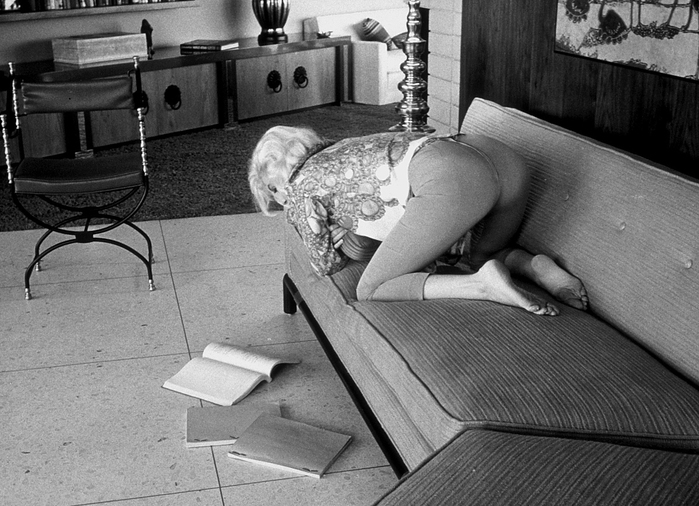
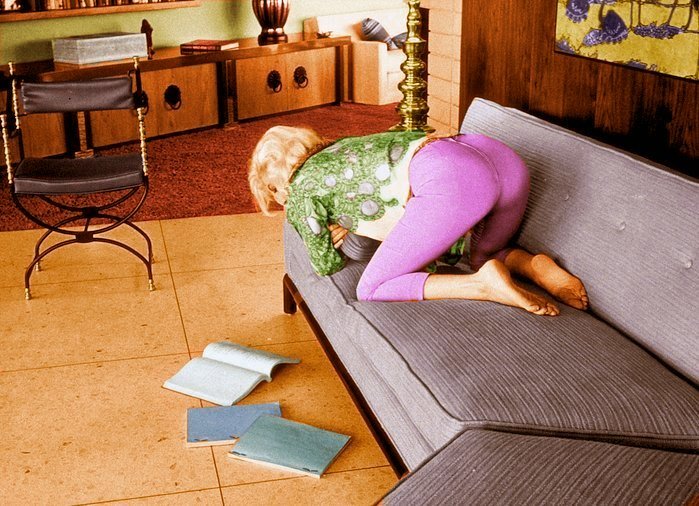
barris marilyn monroe reading

tracy weiner- whose writing biography class constitutes the sole semester of biographical training that comprises the biography concentration of my masters degree in the humanities- once said: the biographer has the power to control perception.

that sounds a bit maniacal, but consider the case of the horrible things jackie allegedly said at random deathbeds.

as a biographer, i’m under no moral obligation to discuss the horrible things jackie allegedly said. i can’t remove the random deathbeds from jackie’s history, but i can erase the horrible things she may have said there. i can leave them out altogether and you’ll never be the wiser.

i can just as easily bring them up without any context and leave you thinking jackie’s a callous, intolerable bitch. i can make you ask, jackie, how could you stand at a random deathbed and say such a horrible thing?!

or, i can contextualize the random deathbeds and show you how the horrible things jackie said there were entirely warranted and were, in fact, not so horrible.

i can make the horrible things jackie allegedly said at random deathbeds look entirely within her character or completely out of it.

i can also cushion them with the word “allegedly,” so before you even hear that jackie said horrible things at random deathbeds there is already, in your mind, some shadow of doubt.

when it comes to your thinking on the horrible things jackie said at random deathbeds, i hold great power.

(presuming, of course, that you care about jackie and that it is of some importance to you whether she was one to say horrible things in general and at deathbeds in particular.)

as is nearly always the case, the story of the horrible things jackie may or may not have said at random deathbeds is important not so much for what it says about jackie as for what it says about us.

the core revelation of tracey weiner’s writing biography class was that there are practices- be that chronology, word choice or whatever- that biographers use to manipulate our thinking on a subject and impose their own beliefs.

though non-fiction masquerades under the auspices of being entirely true, it truly isn’t. it’s perception. and opinion. and a whole host of personal biases.

and so biography is maybe as much about the biographer as about the subject. within the genre, there’s a great deal of clucking over this. it’s often labeled a handicap, though i don’t think it always is.

i crave examples of female adventure, of women deviating from the expected.

from the first, that is the lens through which i have seen jackie. it’s a view that’s been missing in both the biographical record of her and her iconic persona and one that, i think, is integral to our understanding of who she was. it can’t be a coincidence that, time and again, when discussing her publicly, her children evoked her love of adventure.

i look upon hers as the most significant female life of the american twentieth century. i date that significance to the onassis years. and i base it on her fictional alter ego’s narrative journey through tabloid magazines.

all of that deviates from pretty much every existing line of thought.

that heroine though – the rich kid from newport who married a pirate and moved to greece and allegedly said horrible things at random deathbeds- she, my friends, is completely kick-ass.

but people like their icons boring. they like to play it safe. they prefer that their former first ladies be quiet, kid-gloved and kitten-heeled rather than wandering capri barefoot and without a bra.

even jackie’s biographers are skittish when the story strays far from her iconic image. in the case of the horrible things jackie allegedly said at random deathbeds, they hand over the anecdote like a hot potato, thrusting it upon the reader at a chapter’s end.

the schelesinger tapes evoked a similar sense of disquiet. jackie was catty! jackie had opinions! oh my god, jackie held a grudge!

as far back as the 1960s, when confronted with evidence of her humanity, the world has recoiled.

in taking on a set series of meanings, our cultural icons are supposed to be safe and sterile and silent. they are not meant to change but rather are fixed images, trapped like han solo in carbonite.

culturally, this is an important process. but it’s also one that biography should counteract.

the biographer has the power to change perception.

but can the biographer rewrite a myth?
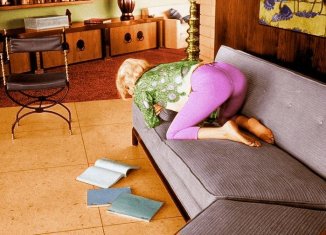
(photos by george barris)
jackie! the authorized biography

John Kennedy’s victory in the 1960 presidential election raised interest in his wife to a fevered pitch. But, Jackie was adamant that she would do things on her own terms. She detested the  prying and made a preemptive move to thwart conjecture about her private life.

At her mother’s suggestion, Mrs. Kennedy appointed Mary Van Rensselaer Thayer— Janet Auchincloss’ friend and a former editor of the Washington Post—as her authorized biographer. The (flawed) thought being that if an authorized version of her life were presented to the public, it would be taken as pure fact, the public curiosity would be saited and interest would wane.

As her authorized biographer, Thayer was given exclusive access to Mrs. Kennedy’s voluminous scrapbooks, photo albums, and letters, as well as access to the future First Lady herself. And though it was Thayer’s name that appeared on the book’s jacket, Jackie was closely involved in its production and the final product heavily bore her imprimatur. Mary Bass Gibson, who later purchased the serialization rights for Ladies Home Journal, recalled that Mrs. Kennedy “did a lot of the writing in bed and then Molly [Thayer] would take it over and rewrite it.” Thus, the resulting text, published in the winter of 1961 as Jacqueline Bouvier Kennedy, remains the closest we have ever come to having Jackie’s memoirs. Jackie herself is believed to have penned the first draft.

So why isn’t Thayer’s book beloved by millions and in its 8,000th edition? Here’s why…

Jacqueline Bouvier Kennedy is an authorized biography in the strictest sense—meaning it is totally safe. In accordance with Jackie’s wishes, Thayer produced a saccharin treatment of the Kennedys’ life that breezily glossed over any unpleasantries and laid the foundation for the myths that followed. It says very little that people didn’t already know about Jackie in 1961. Much less things we don’t know about her now.

(Jackie was obviously pleased as she rehired Thayer in the mid-1960s to write a companion book on her White House years.)

But there is one passage that’s worth mentioning. The Kennedys’ marital struggles were an open secret in Washington by this point, and Thayer makes a brief nod of acknowledgement towards them, presumably with Jackie’s tacit approval. She writes of Jackie, contemplating marriage to Jackie Kennedy in 1953:

[S]he realized that here was a man who did not want to marry. She was frightened. Jacqueline, in this revealing moment, envisaged heartbreak, but just as swiftly determined such heartbreak would be worth the pain.

Peel back the language of Harlequin romance and this statement tantalizes. I think it also plays up the element of Jackie’s character that is so often overlooked and yet one that her children evoked time and time again: her spirit of adventure.

She knew he didn’t want to marry. She knew it was going to be difficult. And yet, she picked the challenge— the adventure— nonetheless.

things you never know if you never ask

the first legit biographer to ever read jackie was a pulitzer prize winner with whom my only in-person interaction had been the observation that there should be more stalls in the women’s restroom at the national press club.

because, during a panel, she had expressed liberal views about what constitutes a biographical liberty, i shipped eight questionable pages of jackie off to her to see if, in her estimation, i had sinned.

it’s hard to summon momentum. to keep up your energy over the long haul. because this- writing, biography, life- is a mighty long haul. what you need is some galvanizing force that- even if it leads nowhere, even if it’s fleeting at best- gets you going. it gets words on the page.

the pulitzer prize winner wrote back. her email opened with this line: “well, i must say i enjoyed that…”

as though she hadn’t expected to. as though she were genuinely surprised.

i’m tempted to print out this email and frame it as a reminder. because this is the response i’m writing for, this is the response jackie should get.

you think you know her story. you don’t. i’m going to tell it, though i do not yet know how.

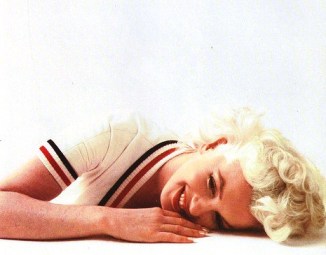
(photo by milton greene)

dated

in the spring of 2004, with the confidence one can only have as a graduate student straight out of undergrad, i wrote the eleventh chapter of a non-existent book.

because i had to read anna karenina in five days and my longing to compare the use of the first person plural narrators in a rose for emily and the virgin suicides never gained any traction, i wrote about jackie. i knew her life like the back of my hand. i figured writing about her would be a breeze.

it wasn’t. to this day, it isn’t.

i might’ve been a nicer person in graduate school had i known then that i would be wrestling that same chapter for that nonexistent book now. might’ve been less prideful, less hee, hee! you’re all trying to apply hegelian theory to the grapes of wrath while i’m reading tabloids and revising a chapter that i’ve finished three weeks before our thesis is due!

eight years later i am still revising that chapter. admittedly, it’s changed. there’s better characterization and structure, and it’s gone from the middle of the book to the beginning. but the guts are the same. and, much to my chagrin, it’s gotten a little dated.

way back in 2004, i made a mistake all rookie writers make. i assumed my book would be published immediately, to great fanfare. because of that, i opened with this sentence: “the fallout was instantaneous, the response was shock and awe.”

in my innocence, i didn’t realize an allusion to the war strategies of george w. bush might not be the way to go.

a gentle reminder re: Jacqueline Kennedy: Historic Conversation on Life with John F. Kennedy (the book i’ve not yet read/the tapes i’ve not yet heard)

there’s an account of jackie that stands out to me among all the others, if only because it’s irreconcilable with the woman the media portrays.

it comes from an old female acquaintance, who complained of jacqueline during the 1940s: “she had so many sides. she behaved very capriciously. she’d be very seductive to a man at a party, sitting next to him, and then stub her cigarette on his hand.”

this is the jackie i love. the ballsy bitch beneath the breathy voice. this is also, from the sound of it, the jackie that the world will be meeting through the jackie tapes. a woman both cuttingly perceptive and astonishingly catty.

the jackie tapes are fascinating, yes (i assume). they teach us many things we did not know (jackie disliked mlk! and degaulle! and lbj! and ted sorenson!) and remind us of others (she love loved andré malraux).

my one concern about these tapes is this: they represent jackie at one point in time. and, if jackie teaches us anything, it is that it’s dangerous to reduce anyone to a single story. we are all more complex, more nuanced than any interview or anecdote could ever convey.

explosions!

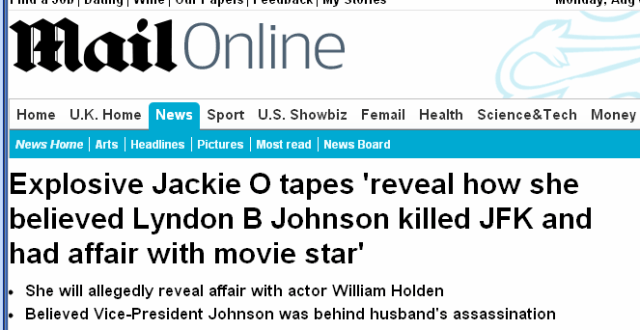
read THIS and then let’s talk.

i will now answer a series of questions you have not asked:

(1) did lyndon johnson kill JFK and have a love affair with a movie star as the sentence structure of this headline would lead us to believe? no.

(2) was lyndon johnson ever governor of the state of texas? no.

(3) did jackie gave arthur schlessinger a deeply revealing interview that was not to be released until 50 years after her death? yes.

(4) was this interview in any way ever “secret”? no.

(5) are the tapes “explosive”? YES!!!! or no.

(6) did jackie have a love affair with william holden? she cut her hair like audrey hepburn’s in sabrina, so the answer is obviously yes.

(7) did jackie find the panties of jfk’s teenaged lover in her white house bedroom? this has been a set-piece scene in every single kennedy made-for-tv movie of all time, so it’s clearly totally true.

the theory on which i’ve based nearly everything i’ve ever written about jackie is that we are all of us reading tabloids all the time. yes, you may not subscribe to u.s. weekly and you may not know jessica simpson’s age and the name of her hairdresser, and you can pretend you’re above this, but if you do, you’re sorely underestimating the american celebrity-industrial complex.

we’re all in this together. if you read a snippet of gossip anywhere online this morning, you are reading u.s. weekly just as good as if you subscribed.

the tabloids are everywhere. they are on fox news and cnn. they are usually cited, but their information is presented within a news report so it’s hard not to take it as truth.

case in point- on sunday, a british tabloid recycled a story that, in america, has fronted the national enquirer time and again. by monday, it had traveled across the pond into the american mainstream press and we were all wondering if jackie was sleeping around and promoting conspiracy theories better peddled by oliver stone. never mind that every article sourced the daily mail and abc promptly denied the reports- the story had wings and it took off.

and, as much as i love tabloids, this is what i hate about them: i hate that this is the narrative people will remember. people who have never read a book about jackie and will not listen to the “secret” “explosive” jackie tapes in the fall, people who won’t listen then and hear her say whatever it is she’s going to say in that crazy strange voice of hers, they will remember this.

they’ll remember her as that woman who slept around to get even, who thought a man that was never governor of texas did her husband in.

that’s what they’ll remember though it’s not who she was.