oh mother dear, we’re not the fortunate ones

(19 may 2010)

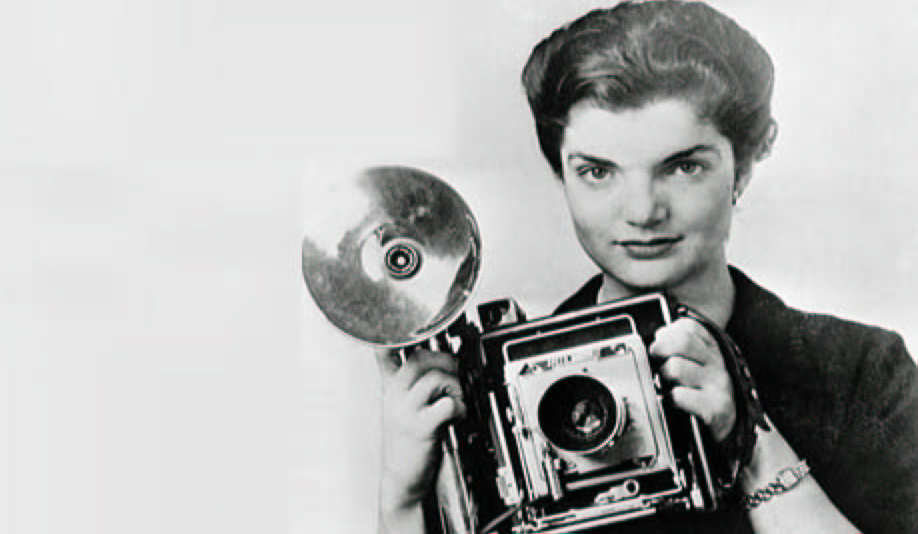
Like millions of former English majors working in borderline abusive secretarial jobs, I have written a book. It has not been published, which is pretty much the same as having not written anything at all.

There’s this book I’m meant to write. I’ve known it since before the other. And yet it is hard to ratchet up whatever it is that it’s going to take to write what’s next.

It is challenging to write a follow-up to something that has never been read.

That makes it sound far more important than it really is. It’s not the gospel or an epic or, heaven help me, Fiction. It’s just biography and it’s just Jackie- a subject that is the biographical equivalent to the beauty pageant answer “world peace.”

So in the large scheme of things like God and Franzen, it is relatively unimportant that there’s this Jackie book I’m meant to write. And it’s fairly inconsequential that this is THE Jackie book and that I really really don’t want to write it because it is an inferno of impossibles.

Because biography done well is a whole hard world of difficult and I’m not ready to fling myself in the abyss just yet.

These are all things I should have considered before mentioning this Jackie book to a fellow biographer; before casually tossing it out over the humus plate in the simple hope of garnering that amorphous credibility that comes from the respect writers have for one another’s as-yet-unexecuted Great Ideas.

It is a great idea so I was stupid not to have foreseen the explosion of enthusiasm its revelation would trigger. I should have anticipated the overpowering gung-ho.

There are three reasons why this project, this Jackie book- otherwise perfect- appalls me to no end:

1. It involves a language I do not speak.
2. It involves money I do not have.
3. It involves sources that do not exist.

Never mind that the few sources that do exist appear to be systematically dying as I approach them.

There’s an Elvis song entitled “It’s Impossible.” The actual opening lyric is “It’s impossible to tell the sun to leave the sky.” My family bastardized this line into the distinctly different yet equally truthy observation that “it’s impossible to stick a piano up your nose,” the sentiment that perhaps most accurately captures my feelings towards this project.

This Jackie book? It is a piano up my nose.

I do not say any of this to the fellow biographer when, three months later, she returns to the subject of the dreaded Jackie book. I do not tell her it’s a piano up my nose. Instead I nod and smile as she says Jackie book’s time has come. That it is a story that MUST be told. NOW.

It could be a documentary! A mini-series! A Sophia Coppola-directed feature film!

The fellow biographer tells me this and only then does she avert her gaze toward her falafel and drop the bomb for which I have been waiting all this time.

That it would be better were I an academic or an older, previously published white man (sadly, I am neither), Because there is no funding for girls like us.

A sentence that, just hearing it spoken, I know is going to be hell on earth to repeat to my parents.

When I do, a full week and a half later, my mother says- her voice fraught with the hope that her daughter is the reasonable, financially cautious young woman she was raised to be and an inkling that she probably isn’t-Well, maybe someday you can really do it, but the timing’s just all bad right now, right?

And I couldn’t help but laugh. Because though I’m a woman of few philosophies, the one I’ve held most dear is that one must imagine somewhat more boldly than may be socially acceptable and that when things are at their most inconvenient and impossible, that’s when they’d really best be done.

Which is essentially what the biographer meant when she said, We’re story-tellers and, really, nothing else matters when you’ve a story to tell.

So maybe this is it. Maybe Jackie’s time has come and it will be the year that- without French or funding and with sources dying right and left- I finally try to tell this story that all the older, previously published white men have inexplicably overlooked. This story that— I am quite sure— was left behind just for me.

the sisters

(12 november 2010)

in the arena of nonfiction publishing, things tend to move at a pace otherwise unacceptable in the natural world.

since first reading volpone in dr. william mcclung’s spring 2001 survey of english literature 1375-1785, i have been waiting to read more about lollia paulina, the woman who, wearing the gems of her family’s pillaged kingdoms, “came in like starlight, hid with jewels,” “emeralds and pearls strung alternately, glittering all over her head, hair, bandeau, necklaces, and fingers” though, according to pliny, “it was on no great occasion.” a historical figure known solely for having worn an expensive dress to a casual dinner. for nearly a decade i have found this gloriously hardcore. alas, lollia only just this year got a wikipedia page. a full book is, i fear, eternities away.

this is one of the many problems with nonfiction. a figure will languish without sparking interest for years and years and years and then, from seemingly nowhere, there will be veritable bonanza. as though someone threw open the tap, from whence there was once nothing, over a three month period will come a flood of diaries and letters and illustrations and lost novels and unauthorized tell-alls and revealing memoirs and recordings and coffee table books.

i say all this now because the mitford sisters, they are coming.

given that there were approximately a million of them and they not only all lived fascinating lives and inevitably crop up in the biography of anyone who lived during the 20th century about whom there is a biography, but they also wrote witty things to one another as well as to other writers and artists and themselves published fairly prolifically in the outside world, this should not be surprising.

and there is a reason for all these books. one would not expect the history of young jack kennedy, the british aristocracy, the american funeral industry, the rise of hitler, the marketing of guiness, the french military, the creation of the california communist party and the development of the twentieth century english novel to collide. that they do and all in the lives of five (six? seven?) supremely attractive girls just makes it that much more spectacular.

these mitfords, they are amazing. if you haven’t met them, here’s your chance.

because this fall will see the publication of three out-of-print nancy mitford books plus the reissue of two others along with a recording of rosemary davis reading “the highland fling.” also coming are the memoir of deborah mitford, the current duchess of devonshire, plus her letters to/from the artist patrick leigh fermor. and then there’s a biography of jessica mitford, the socialist american transplant anti-funeral industry crusader extraordinairre whom i deeply, deepy love. as if that weren’t enough, decca’s treatise on muckraking is being published by the new york review of books as well.

this hurts my heart.

there was a moment a few years ago when i realized i could never read all i wanted. this moment right here, this is different. this is the moment i realized i could never afford to.

well shucks, norman mailer

(4 april 2010)


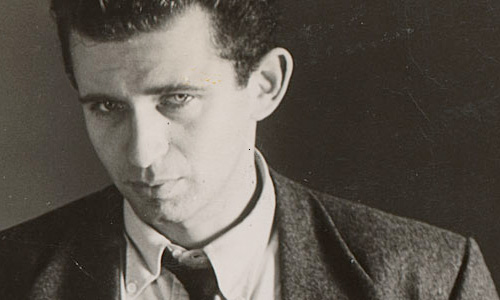
norman mailer and i do not get along. i’m just not that into him.

but after reading THIS (and THIS and THIS), i’m re-evaluating.

and yes, he may or may not have been married to three women simultaneously and undoubtedly stabbed one. and he did a biographical hatchet job on my dear marilyn. and he justified adultery as “literary research” and on top of that he was a horrible misogynistic bastard. yes, yes, yes. i get all that.

but then there is this: “the night would end on the floor of her living room. he promised to write…”

this makes me kind of love norman mailer. partly because the man knew how to end an evening, but more so because he promised to write. and, really, that’s all a girl needs. the promise of writing. who even cares if it comes true.

my dear norman mailer

(10 november 2007)


my dear norman mailer,

you’ve died.

and i don’t quite know what to make of this other than the fact that it makes me kind of sad.

yes, you held some beliefs that were total bunk. you exploited marilyn as a biographical sex-toy. you crusaded against the women’s liberation movement. you participated in a literary smackdown with gore vidal. you had nine chidren and six wives, the second of which you stabbed.

as if this weren’t enough of a biographical legacy, in your neediness and contrivance towards the hemmingway masculine ideal, you cultivated a belligerent literary machismo that was debilitatively seared across everything you ever wrote.

despite the feigned nonchalance, you so obviously wanted to be remembered. you so obviously needed to be a big deal. the footfall of your every stomping sentence gave you up.

you never seemed quite real. you always were a bastard.

but i’m a girl who likes bad boys and if they have a way with the pen, that’s better and better.

60 years ago, you emerged as the enfant terrible of the american literary scene and set out to write The Great American Novel. perusing your obituaries this morning, it seems to be the general consensus that you never did. but does that really matter?

in graduate school, my biography class covered the lost art of obituaries. the first line is crucial. you can fumble your way on the rest, blithely romping through schooling and careers and wives and honorary doctorates, but you can’t fake that first line. that first line is a bitch.

it’s a bitch i think you, norman mailer, would’ve enjoyed slapping around. and i think even you- the combative tease, the unremitting bombast, the cocksure grump with dialectic derring-do- would be satisfied with the title history has bestowed upon you.

the macho prince of american letters.

well played, norman mailer, you bastard you.

norman mailer + me

(17 may 2007)


lee harvey oswald is of little concern to me beyond the fact that he became a political assassin at the age of twenty-four (a historical fact all too often obscured by a receding hairline). i believe oswald killed kennedy, that he did it alone and that the grassy knoll is a load of bunk. and i abhor oliver stone for ever convincing me otherwise.

so i’m not quite sure what compelled me to pick up oswald’s tale. because norman mailer and i don’t really get along. he’s played dirty with my girls and you can’t just forgive a guy that. but still… a girl does like to forgive.

i have this suspicion that good old norman mailer isn’t really a bastard. he’s just a guy who was unfortunately born after ernest hemingway and who has spent his entire career trying to strut a literary machismo of equivalent value. and that’s tough. as norman mailer has illustrated.

norman mailer so desperately wants to be a bastard. his neediness is discomfiting. you can see it right there on the page. in the way he swaggers about, cocksure in his dialectic derring-do. strutting his syntactical anarchy. it’s in the laziness of his transitions, the ballast of his phrasing, the sly jabs of his judgments.

he comes off as the kind of guy that slaps his women and keeps a rifle by the nightstand and boxing gloves on the bedpost. or at least he comes off as being the kind of guy who wants to come off as that kind of guy. norman mailer wants the world to believe he is a bastard. his every word is a naked testament to this need.

which is kind of sad. and which, once we got past the honeymoon period, has annoyed me on nearly every single page of oswald’s tale. i want to say, norman mailer, stop being a bastard.

because norman mailer is being a bastard. and honestly, i don’t know if norman mailer is telling the truth anymore. if he’s really being norman mailer and norman mailer really is a bastard or if he’s writing as he thinks Norman Mailer Writing As A Bastard & Great Masculine Writer of the 1950s would write. and that, in turn, makes me doubt whether norman mailer actually spoke to all the people he says he spoke to and whether he actually has any clue what happened with oswald in russia and, in the pits of untrusting despair, i can’t help but wonder whether this whole 719-page pulitzer prize winning masterwork is the figment of a deranged historical revisionist, which makes me want to throw down the mammoth thing and scream norman mailer, you bastard you.

because this bastard can write. it’s just that his writing is wrapped up in brawn and testosterone and spit. it’s a splashy cocktail of aggression that leaves me longing to put on a diaphanous gown and marabou shoes and drink daquaris in feminine rebellion. because really, deep down, i think it’s all a pose.

i think secretly norman mailer rises early in the morning to make pancake breakfasts for his unfortunately named wife norris. that he has a persian cat named fifi whom he worships and who stars in the occasional short story he pens for his grandchildren who call him “paw-paw.” that he secretly gets a kick out of wearing pink argyle socks. that he licks the lids of his jell-o swirl pudding snacks and separates the chocolate 2/3s from the vanilla. that he’s fearfully afraid of needles and slugs and that they make him squeal like a little girl and that he’s fearfully afraid people will find that out.

i don’t think norman mailer is a bastard. because i don’t think men who dedicate books to their wives can be bastards. at least not real ones. no, i think he’s lying to us all. norman mailer, you bastard you.

L’Autrichienne

(31 october 2006)

Literally a year after the first teaser and no less than thirteen lifetimes of waiting, Marie Antoinette finally arrived. So I tarted myself up and trotted downtown to greet la Reine. I was not disappointed.

But my adoration for and enjoyment of this film won’t prevent me from exploiting it’s few discrepencies and omissions to make my The Whole Truth Is So Much More Interesting Than Anything That Could Ever Be Conveyed On Film And That Is Why Everyone Must Read Biography point.

As a person who has people, I am unspeakably thrilled whenever any other person opts to cinematically/theatrically/televisionally/biographically depict any of my people. But the thing about having people is that your people are invariably different from the people of others- even when they’re the same people.

Got that?

We all latch on to different details, different characteristics, different witty one-liners. A friend and I are writing a play about Marilyn and Jackie. Her Jackie is alone on a boat, wearing pink, and pregnant. My Jackie is a bohemian artist walking barefoot in Greece with paint flakes on her jeans. The same Jackie, but totally different. This is to be expected.

A surprising lot of how you view your people has to with your introduction to them. I met my Marie in Stephen Zewig’s An Average Woman, a 1932 biography that tenderly danced around the royal sex life and abounded with rogue exclamations (Louis gestured for d’Artois to bring the dinner rolls!). Zewig cast Marie as an ordinary person of limited education whose sense of duty enabled her to handle the horrors in her life with extraordinary courage. In essence, the woman was a master of the emotional kaboom.

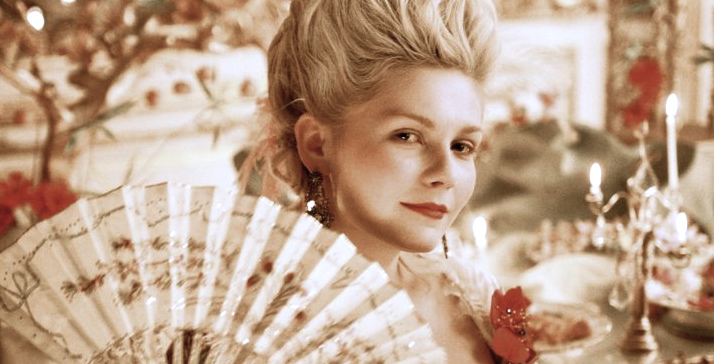
Sophia Coppola’s Marie Antoinette is Coppola’s Marie (which we know is, in part, based heavily on biographer Antonia Fraser’s Marie)- a charming, flirty, dutiful vixen who held her head high in a palace echoing with cruel whispers. Coppola’s Louis, played by the brilliant Jason Schwartzman, was awesome. Her Marie, very well played by Kirsten Dunst, was lovely and was far better than no Marie at all, but she was not my Marie.

Coppola’s Marie was not my Marie largely because she was uncomfortably confined within one hour and fifty-eight minutes. And while she very adeptly captured the marriage’s sexual dysfunctions and the stifling pressures to produce an heir, in such confines, Coppola cut from her Marie’s story the details that most matter to mine.

Count Fersen (Jamie Dornan) appears in three scenes. He would seem little more than a hot one-night stand, which quite possibly resulted in the birth of the Dauphin, and whose departure sent Marie spinning into a depression manifested by long baths, tamer hairstyles and undereye circles. In reality, he was the Queen’s lover and friend for over a decade. He masterminded the royal family’s unsuccessful escape from imprisonment and risked his life repeatedly venturing into revolutionary Paris to see her. He was entirely discrete. He never spoke of her.

There’s also a reduction of the royal brood- three children appear rather than four. The death of Princess Sophie is depicted while the birth of the duc de Normandie is not. The birth of the highly anticipated Dauphin is portrayed while his death shortly before the revolution is entirely ignored. It was, in fact, the petulant duc de Normandie- who does not appear in Coppola’s film- who would become the Dauphin, who would be caught masturbating by his guards, and who would make the molestation charges that sent his mother to the guillotine.

Film is a convenient medium in that it allows for easily accessible expression. You don’t have to write twenty sentences to adequately convey the wryly disapproving arch of a royal brow. And I know things must be condensed. Stories must fit into boxes. Plots must flow quickly. We must not make people in theaters yawn over small details.

This would be why I stick to writing. The movie of my Marie would last at least four hours. The movie of my Jackie would be ten days long.

Because i think you can’t know Jackie if you don’t know that she was keenly aware of her husband’s pathological philandering. That her premature daughter died while her husband was sailing in France and that he continued sailing in France for a week before he returned home. That she lost a three-day-old son, a son she never saw, three months before her husband was murdered. That she was leaning in six inches from her husband’s face when the final shot hit. That, at Parkland Hospital, she nudged a doctor and handed him a sizeable chunk of her husband’s brain. And that four days later, the day she buried her husband, she threw a birthday party for her three-year-old son.

You have to know that because, to an extent, it is the shit in our lives and how we cope that makes us who we are. Admittedly, Marie Antoinette is a hip film attempting to resuscitate a distorted icon and make her applicable to a new generation. I am wanting it to mean entirely more than it was meant to. But too much is assumed when we deal with icons. Most people know nothing about Marie beyond the fact that she was decadent and lost her head. If this is the one chance we have to introduce a new generation to her, this is not enough for my Marie. Coppola verifies the decadence while only skimming the steeliness beneath the surface.

I sat through the entire movie watching the Princess de Lamballe, knowing we would later see her head on a pike. We didn’t. Coppola spared us that. But I doubt many people in the crowd knew the Lamballe was butchered, her heart ripped from her body, her head put on a stake and raised before the prison windows of Marie, whom the crowd asked to kiss the lips of her beheaded, beloved best friend. And that’s a pretty important smallish detail. You know Marie more by knowing that.

Coppola left her Marie in a carriage with Louis, bidding farewell to their Versailles. I wanted her to either leave them on the eve of revolution or see them through to the end. To show the King bidding his family farewell the night before what he knows will be the day of his death. To show Marie hearing the accusations her own son made against her, accusations so trumped up that even the revolutionaries were ashamed.

Maybe I just want everything to be Schindler’s List– to be visceral and epic. Because these are my people and they deserve to be shown in their full glory. Ribbons, feathers, sweets, champagne, and flirtations make for a pretty movie, but they are not a life. These people, my people, have lives of incredible complexity, unbelievable glamor and harrowing tragedy. It’s so much more than a matter of clothes and manners. It’s grace under pressure. And we could use more of that these days.

female troubles

(8 may 2006)

biography is the national enquirer of literature. when done badly, it’s artificially revealing; when done well, it’s intrusive. the lynchpin of the genre is that each work is just as much about the biographer as the subject- if not more so. because there are always gaps and the author fills them.

this becomes particularly problematic in biographies of women. i recently read the sisters: the saga of the mitford family, then went on to reread one of the misses mitford’s madam de pompador and was struck by a line that took it for granted that madam de pomp’s happiness stemmed from her total deferment to the king and his wishes. nancy mitford surmised that this was “as it is in any happy union”- a statement that makes perfect sense when aligned with nancy’s own deferment to gaston palewsi, with whom she was madly in love and whose great love she was not.

this set me off on an email tangent with a friend about whether, as a woman, happiness is really based on complete sublimation of oneself, which naturally led to a favorite dead horse of mine- how difficult it is to approach a famous/historical female figure outside the convenient context of husbands.

believe me. i’ve tried. it’s tough.

so much of a woman’s public identity is based on the man she’s with or the drama that stems from that, a disconnect that is evident at the most superficial level of biography. check out titles the next time you’re at powell’s. for the men- a twilight struggle: the life of john f. kennedy; winchell: gossip, power, and the culture of celebrity; long live the king: a biography of clark gable; the survivor: bill clinton in the white house; the last czar: the life and death of nicholas II; andy warhol: the life of an artist; capote: a biography.

and now for the ladies- mistress to an age: a life of madame de stael; vera: mrs. vladimir nabokov; the silent woman: sylvia plath and ted hughes; the most beautiful woman in the world: the obsessions, passions, and courage of elizabeth taylor; the truth about hillary: what she knew, when she knew it, and how far she’ll go to become president; and two of my personal favorites- painted shadow: the life of vivienne eliot, first wife of t.s. eliot, and the long supressed truth about her influence on his genius, and jacqueline kennedy: the warmly human life story of the woman all americans have taken to their hearts, including the latest events in the life of this magnificent woman.

titles devoted to male subjects are largely defined by chilly detachment, while those pertaining to women are overheated and clunky. it’s indicative of a difference in the way books about men are marketed and sold versus those about women. incidentally- five of the seven books listed in the paragraph above were penned by men, so this isn’t a simple matter of feminine effusiveness.

currently, the starting point with any female biographical subject is as wife or lover. madam de stael is considered a key figure in the development of the novel and one of the leading french philosophes. her work is set on par with that of rousseau and voltaire. yes, she was sexually liberated, but the title mistress to an age suggests she methodically bedded the emperor’s entire army, an exaggeration that undercuts the significance of her work.

at both the historic and iconic levels, jackie onassis’ was arguably the most significant female life of the past century. and yet, how lazily biographers have wrestled with her. again, titles say it all: mrs. kennedy: the missing history of the white house; jack & jackie; jackie after jack; just jackie; jackie; jacqueline bouvier; a tour of the white house with mrs. john f. kennedy; jacqueline kennedy onassis; jackie and ari; the onassis women; and the ever-popular, jacqueline bouvier kennedy onassis (for apparent lack of anything more descriptive, it has been deployed on three separate occasions).

in biographies, JFK is summarized by his war experiences, one night stands, politics, or unfulfilled possibility. jackie is reduced to fashion, decorating and husbands. what are the odds that if JFK had outlived jackie, there would have been a book entitled jack after jackie? i’m thinking slim to none.

an argument grounded in book titles may seem superficial. particularly titles regarding jackie onassis, who has become more of a visual image than an idea or an actual person who once lived. but it says something about the genre and the culture that one of our greatest icons is almost exclusively approached through her names, one of which, ironically, is a feminized derivative.

admittedly, in the case of most of the women discussed here (plath, jackie, vera, hillary), marriage was their conduit to fame. but it isn’t hard to imagine that hillary would have eventually become hillary with or without bill’s help. that plath would have found her poetic voice with or without ted hughes.

jackie’s is a different, more nuanced story. i think she would have married someone who wasn’t JFK and perhaps not have been tremendously happy. but outside the apex of east coast society, she might have also had the freedom to write and paint and sculpt as she wanted, instead of simply being friends with those who did. the jackie i just described- the witty writer whose friends warned that she would be diminished by JFK; the frustrated artist who told photographer peter beard that she wished she could do what he did but she didn’t have the guts- only surfaces in two biographies. and it is a fleeting appearance at that. though the jackie icon is a veritable mine of possibilities, the biographical subject has been cruelly fenced in by wifely nomenclature.

my beloved wayne koestenbaum wrote, “‘mrs.’ seemed in jackie’s case, always to be concealing half-truth.” this then is the fundamental “female” trouble of biography. society/media/biographers/readers (us) are so hung up on the “mrs”- metaphorical or otherwise- that all the fascinating, characterizing concealed truths are flattened. thus, within the written record, our women truly are little more than beautiful, silent shadows. and that’s not nearly enough.

the teddy

(30 april 2006)


teddy kennedy was on the daily show last week. wearing an incongruous bright gold godfatheresque chain bracelet no less, which led me to realize it’s time we reconsider teddy.

not the stern, bloated teddy of today, but teddy circa 1945-1981. the charismatic, charming, carefree but troubled teddy. the teddy who knew how to party and cheated on his harvard exam. the teddy who was HOT.

in contemplating this teddy, we will obviously be glossing over the teddy who drank entirely too much, cheated on his wife, gained weight and contributed in some inscrutable way to the death of mary jo kopechne.

it is teddy, i think, who is the greatest of the family’s tragedies. a fact which, after looking at him for so long, people tend to forget. he’s always out there- all white-haired, red-faced and resolute. his simple survival has led him to be overlooked.

it’s easy to forget that he was a bad student who cheated on an exam so he wouldn’t be branded a disappointment. that he married a beautiful woman whom he couldn’t love enough and who loved alcohol more. that he was swept into politics by an overbearing father. that, at the age of 32, he nearly died in the plane crash that broke his back and killed his friend. that he inherited the thirteen children of his two brothers, whose legacy he could never live up to.

everybody has a teddy. that person who can be so charming and charismatic and has the potential to do so much, and yet either lacks the fiber to fulfill it or is crippled by a fear of real, grown-up life and escapes into a series of personal disasters, ie. chappaquiddick, that sex-on-a-boat business, bar hopping with willie smith. (the polar opposite would be the joan- the insecure, overly sensitive person who becomes haplessly tangled with the charismatic charmer and can’t fight his/her way out of the emotional fray without falling into a similar but opposed series of personal disasters.)

teddys are good people, but they’re heartbreaking to watch. instead of taking calculated risks, they haplessly wander into risky situations and then respond with the improvisations of befuddlement. michael kennedy was a teddy. a non-teddy would realize that neither sexual involvement with a baby-sitter nor football on skis in a blizzard is a particularly good idea. but while a non-teddy sees the potential end of a risk and either accepts or declines it based on that end, a teddy blindly falls into risky situations- not for the thrill that results, but because it’s where they’ve wound up. they take the risk because it’s there. they’re go-with-the-flow people who don’t make plans.

this makes the comparative success and longevity of teddy kennedy all the more admirable. after RFK’s death, he told a friend, “i can’t let go. if i let go, ethel will let go, my mother will let go, and all my sisters.” one of JFK’s mistresses said, “the old man would push joe, joe would push jack, jack would push bobby, bobby would push teddy, and teddy would fall on his ass.” though he’s fallen on his ass time and time again, teddy has been very un-teddy. he has not let go. he gave his neice away at her wedding the same day doctors amputated his eldest son’s leg.

it’s hard to imagine america without teddy kennedy.  i like to think he’ll gradually fade away like 104-year-old rose. and the family will throw grand picnics for all of his birthdays, and put him up in a posh suite in the compound where he can perpetually screen home movies from the good old days. he’s been holding tight for so long. i hope at some point he gets to let go. to just be teddy.

richard nixon breaks my heart

(7 february 2009)

i think the best way to look at it is like this:

richard nixon was not jfk.

this is the fundamental truth with which richard nixon wrestled.

that he was a nobody. a kid with a bad childhood and an inferiority complex the size of south america. a poor quaker with no pulitzer and no father with enough money to buy him one. a paranoid peon who was robbed of the presidency by perspiration. a sad, lonely man who climbed to the top only to screw up all he had finally won.

he seems never to have been young. look back at the pictures. he was always worn down. the five o’clock shadow at 10 a.m. the gullies beneath the eyes. the trenches around the mouth. the man looked 60 when he was barely 35.

look at the kennedy debate- they are contemporaries. it was kennedy who lived every day at death’s door and yet you can practically hear the death rattle in nixon’s bitter arthritic bones.

he was a man who never fit in. anywhere. ever.

he belonged in an age where the ascension to power was more brutal. where it demanded bloodshed and deceit. he could’ve played hardball with henry viii. he would’ve poisoned the king’s bastards.

but nixon was a thoroughly medieval man trapped in modern times.

a man living in the age of television who looked utterly horrid on tv.

it’s a testament to the american dream that richard nixon could become president. it’s a testament to the tragedy that was richard nixon that he blew it every single time.

perhaps my heart was softened by the blurb in time describing how he and jackie passed notes back and forth from their deathbeds. or the funeral, where all the living presidents looked embarrassed and sheepishly bored, shaken by the vivid reminder that one can rise from nothing and, all on one’s own, plummet right back down.

there was something wrong in that. in their embarrassment and shame. some lack of the respect that, admittedly, wasn’t due, but had been agonizingly, debasingly earned.

the man who had suffered a thousand political deaths was gone. this seemed somehow monumental.

and yet, nixon is not monumental. his only real contribution to our nation’s history being that all subsequent unethical hijinx are automatically suffixed with “-gate.”

he was tragically small.

he was not jfk.

nixon was nothing.

and yet…

stranger than fiction

(1 february 2007)

my heart belongs to nonfiction. sometimes i feel i am alone in this, thus, i must periodically be all yay! rah! and mount an unsolicited defense.

any fiction i’ve ever attempted has been complete pretentious crap. but, for the most part, the writing process isn’t so different. yes, there are the safety nets of notecards and quotes and the nonfic-specific unexpected pitfalls- the uncited factoid and (horror of horrors!) the apocryphal anecdote. but there are also the same scary moments of where  are we going here? and the epiphanies where everything suddenly falls into place.

nonfic is very peter pan. it’s an ancient genre but an exceedingly immature one. the only true standard is that biography is more about the biographer than the subject, which is a rather pathetic standard since it so clearly needs to be the other way around. nonfiction has limits that writers simply aren’t pushing. it’s a form older than the novel but one with which all too few liberties have been taken.

which is why there is still this stereotype. this lingering sense that fiction is the artistic end-all and nonfic is simply it’s easy sister. that, because you’re working with a real life that has already been lived and real events that have already happened, everything is neatly plotted out and tied with a bow. that notion couldn’t be further from the reality. because writers of nonfic are dealing with reality, and reality- though it may appear concrete- is an ephemeral patchwork of contrasting impressions. and that’s a hell of a hard thing to pin down.

nonfic is intimate and personal and intrusive. and it’s more than a little gauche- to be peeking through people’s love letters and into their bedrooms and between their sheets. to be supposing what they were thinking. because we never know what anyone is thinking- even the people we know, much less people we don’t.

but that is precisely nonfiction’s beguiling allure. this sense that you can become acquainted with someone from the past, that you can learn from them and understand them without knowing them. because they are characters. and when you write about these characters, they are uniquely yours. they become a tiny piece of your own makeup.

in real life, people are inconsistent. they change direction and marry precipitously and say mean things and screw up their kids. they are almost always misunderstood. in fiction, you’re at ease to plot around that. that, in and of itself, may be your plot. in nonfiction, you’re working in spite of it, which is a terribly humbling thing.

you must nancy drew your way through twelve different versions of the same event spun twelve entirely different ways to find some shard of the way it really might have been. it’s like pulling at a strand of tangled hair. sometimes you can coax it apart. sometimes you just rip the damn thing out.

jackie and i have had some major throwdowns. moments where she said completely atrocious things at random deathbeds and left me to make sense of these incomprehensible actions. things that my jackie would never have done but jackie did them nonetheless. and there’s no avoiding them, because they are what made her jackie.

it’s scary. that moment when your character goes out of character and you’re left staring at a stranger you know everything about but never knew. and you curse her and fight to find the words and write a whole heap of paragraphs trying to justify this one little inexplicable blip in a character so otherwise explicable. and then you delete the whole lot and let her win.

and maybe that’s the difference. fictioneers fight their characters to win. in nonfiction, you fight the good fight and then you let them be.