story-telling

tumblr_luz4q1jk4g1qc545ko1_500

i’m slowly coming around to the idea that every problem in academia, writing, biography, life, etc. is, in the end, a problem with story-telling. either we’re telling stories or we’re telling them badly or we don’t know how to tell them or we think we’re not allowed to.  Continue reading

musings on stories, sources, stories about sources, sources as story-tellers, and the story of story-telling as relates to the story of jackie kennedy’s alleged love affair with mr. RFK (ie. the sex lives of dead people, reprise)

jackie hearts

Lest you think biographers do nothing but lazing about eating bonbons and sipping champagne, it actually boils down to, for me anyway, rather a whole lot of intellectual/psychological heavy lifting about motivations and character and societal demands. Fun times!

Continue reading

the sex lives of dead people (ie. the ‘jackie slept with nureyev! bobby slept with nureyev! everybody slept with nureyev!’ brouhaha caused by a book not yet published which i’ve not yet read)

HEADER

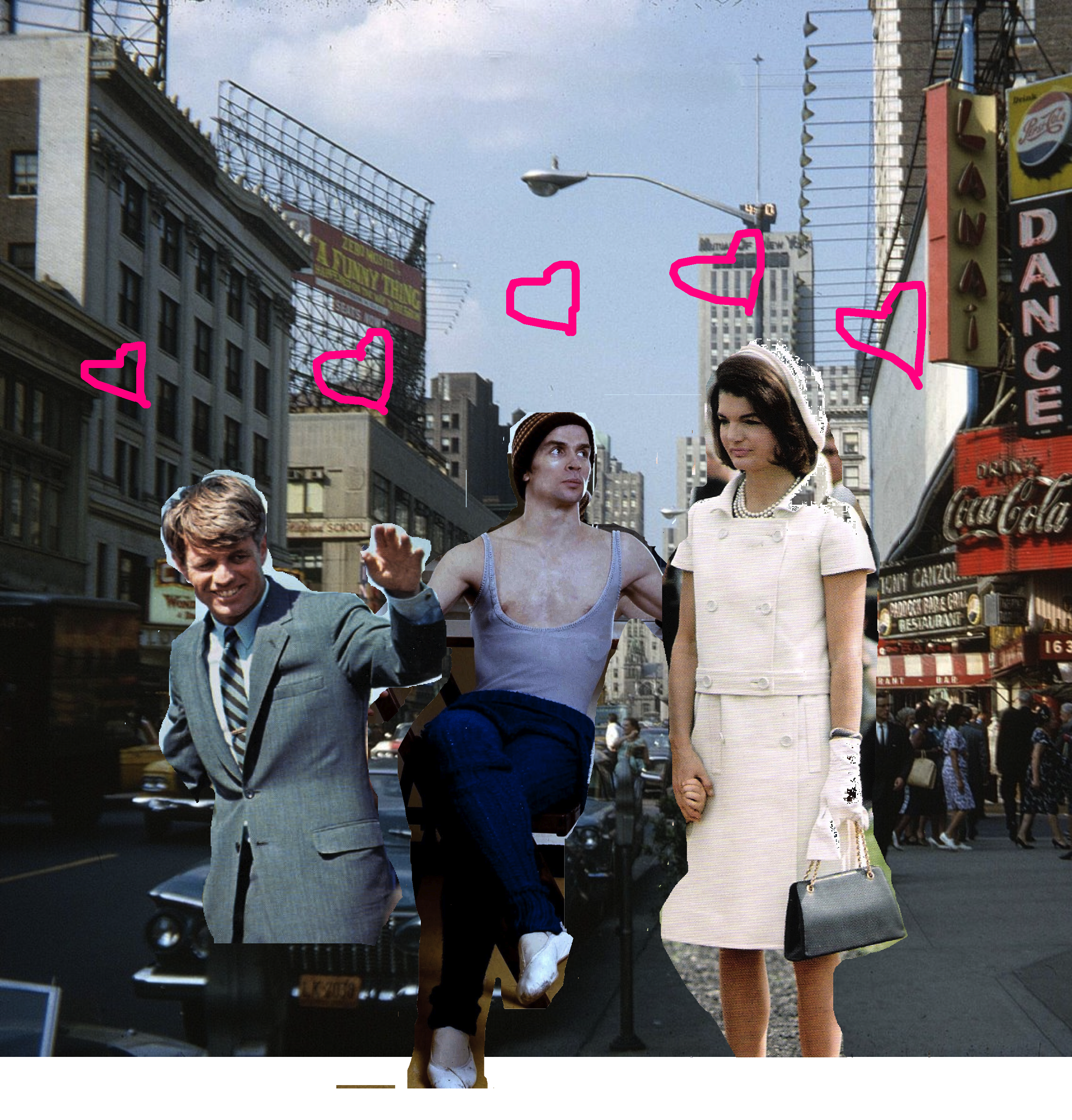
so there was a little article in the daily mail last week about how everyone who was anyone in the 1960s slept with the danzatore rudolph nureyev. as we all know, pretty much everyone who was anyone in the ’60s was a kennedy. and so: nureyev made it with the whole clan!!! Continue reading

biography is personal

it’s a very personal thing, biography.

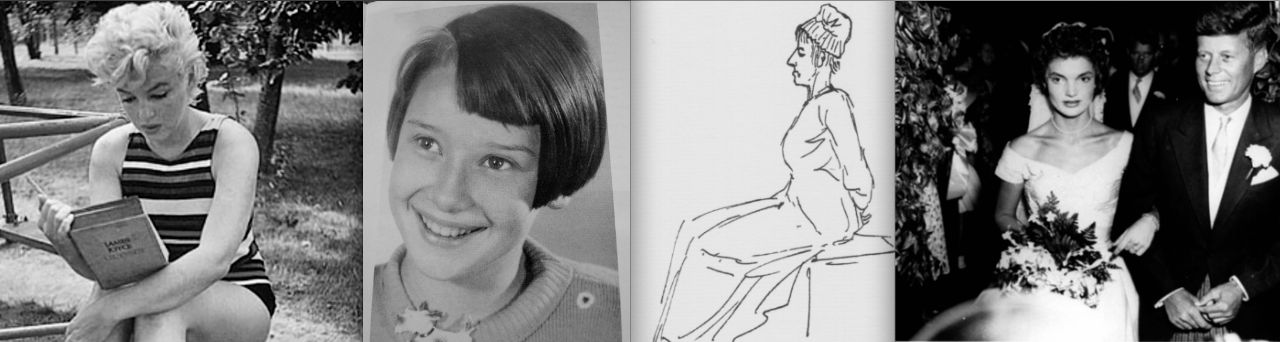
take the question “why jackie?” i don’t know how to answer that without referring to the badly xeroxed women’s history handout from mrs. pavlick’s 6th grade english class.

“why tabloids?” leads to a similarly intimate anecdote of my family’s mid-90s mania for antiquing. when everyone around you has a collection, you learn to collect. Continue reading

biography has sex problems. true story. (+ assorted ramblings re: the awesomeness of 1960s celebrity 2nd wedding dresses)

i started writing about jackie because i deplored the way she was written about. shoddy writing, shoddy scholarship, shoddy story-telling.

when you read 97 books about someone, certain trends begin to emerge. Continue reading

storytelling

the stories of historical figures fall in and out of fashion. and so it’s possible for marilyn monroe and audrey hepburn and marie antoinette and jackie kennedy to be a vibrant, prevalent part of our culture as images entirely divorced from the details of their lives.

as a glutton for biography, i tend to forget this and blithely assume everyone i know is walking around ALL.THE.TIME similiarly burdened by an encyclopoedic knowledge of the kennedys, 1950s film stars, the british and russian monarchies and marie antoinette. that they aren’t is a source of constant surprise. and frustration.

because i don’t understand how those images can carry so much meaning, how they can resonate at all, when striped of the biographical details. the pictures are pretty, yes, but over time pretty gets pretty dull.

marilyn was beautiful, but isn’t the sexiest woman in the world rendered a bit more provocative when you consider that she may never have climaxed? doesn’t she look different when you know that, ashamed of her lack of education, she became an auto-didact and read checkov and joyce? 

as a woman, audrey was an icon of prim femininity. as a girl, she carried messages through nazi-occupied territory to the french resistance in the sole of her shoe. she was thin not because it was fashionable but because, as a teenager, she’d escaped a deportation line and spent a month hiding and starving in an abandoned shed. audrey hepburn was a total badass. dear whole wide world, why do we not remember her for that?

marie was loaded and liked cake, but her life carries more meaning when you consider her death. when you know she was praised all around- even among the revolutionaries- for her great courage and that her last words were “pardon me, sir, i meant not to do it,” an apology to her executioner for having accidentally stepped on his foot.

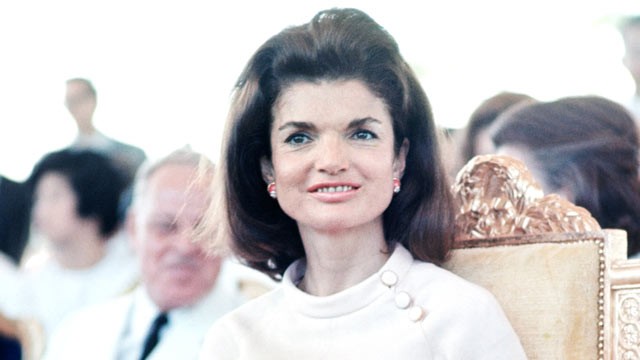
and what of jackie? oh, jackie. as an intolerable jackie snob, i don’t think you can even begin to scratch the surface of appreciating her until you know that she knew about her husband’s pathological philandering. that her premature daughter died while her husband was sailing in france and that he continued sailing in france for a week before he returned home. that she lost a three-day-old son, a son she never saw, three months before her husband was murdered. that she was leaning in six inches from her husband’s face when the final shot hit. that, at parkland hospital, she nudged a doctor and handed him a sizeable chunk of her husband’s brain. and that four days later, the day she buried her husband, she threw a birthday party for her three-year-old son. and that’s just for starters…

images do not do people justice. 

we’re in the midst of a bit of “a marilyn moment”. this has revealed that a significant percentage of my friend-group have never watched a marilyn film. that’s easily fixed and soon they’ll see the hilarity in the fact that my week with marilyn is actually a better movie than the movie it is about.

i confess i hope this will springboard them all into a full-blown obsession that i can further by loading them down with biographies and life narrative analysis and saturday afternoons spent discussing the importance of storytelling. it’s unlikely, i know, but it’s also the biographical dream.

allegations

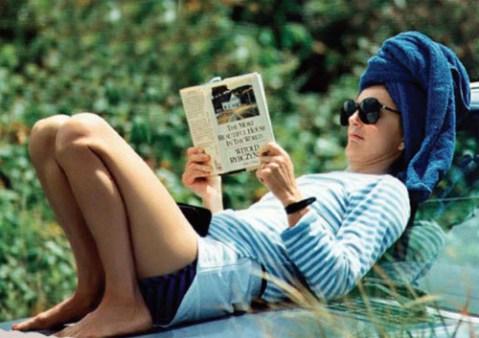
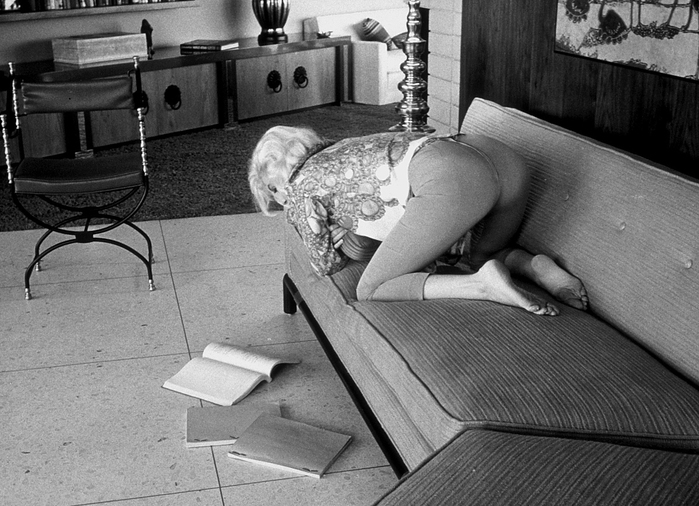
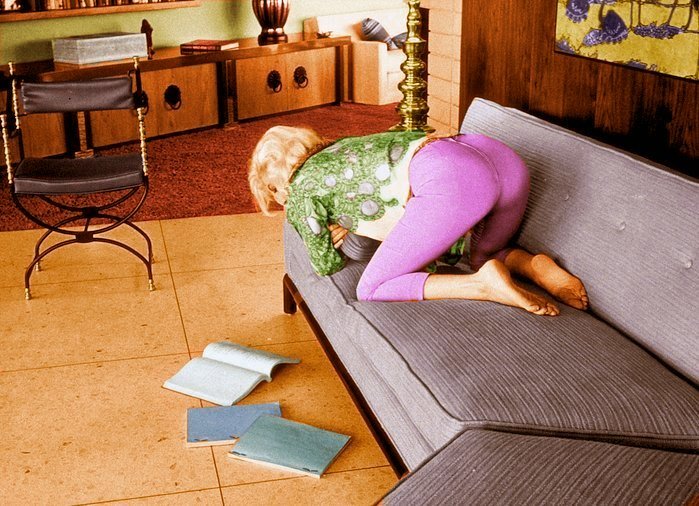
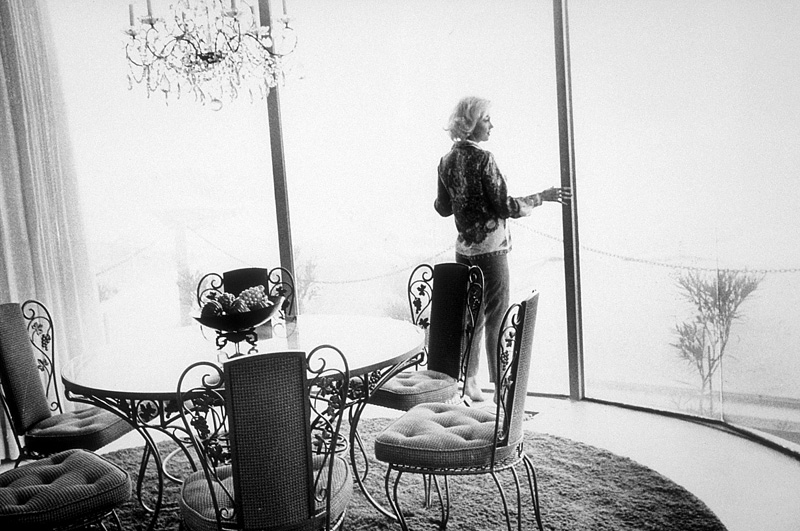
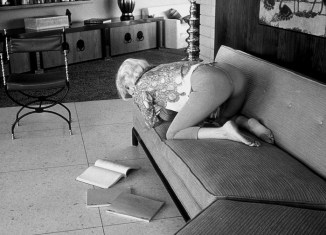
barris marilyn monroe reading

tracy weiner- whose writing biography class constitutes the sole semester of biographical training that comprises the biography concentration of my masters degree in the humanities- once said: the biographer has the power to control perception.

that sounds a bit maniacal, but consider the case of the horrible things jackie allegedly said at random deathbeds.

as a biographer, i’m under no moral obligation to discuss the horrible things jackie allegedly said. i can’t remove the random deathbeds from jackie’s history, but i can erase the horrible things she may have said there. i can leave them out altogether and you’ll never be the wiser.

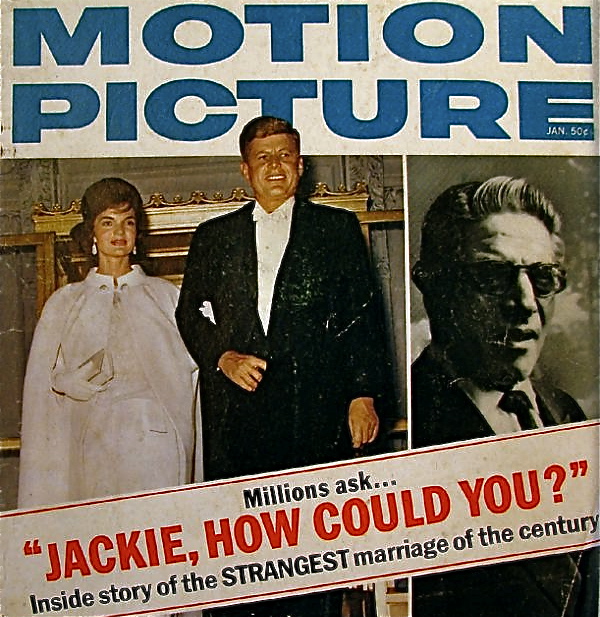
i can just as easily bring them up without any context and leave you thinking jackie’s a callous, intolerable bitch. i can make you ask, jackie, how could you stand at a random deathbed and say such a horrible thing?!

or, i can contextualize the random deathbeds and show you how the horrible things jackie said there were entirely warranted and were, in fact, not so horrible.

i can make the horrible things jackie allegedly said at random deathbeds look entirely within her character or completely out of it.

i can also cushion them with the word “allegedly,” so before you even hear that jackie said horrible things at random deathbeds there is already, in your mind, some shadow of doubt.

when it comes to your thinking on the horrible things jackie said at random deathbeds, i hold great power.

(presuming, of course, that you care about jackie and that it is of some importance to you whether she was one to say horrible things in general and at deathbeds in particular.)

as is nearly always the case, the story of the horrible things jackie may or may not have said at random deathbeds is important not so much for what it says about jackie as for what it says about us.

the core revelation of tracey weiner’s writing biography class was that there are practices- be that chronology, word choice or whatever- that biographers use to manipulate our thinking on a subject and impose their own beliefs.

though non-fiction masquerades under the auspices of being entirely true, it truly isn’t. it’s perception. and opinion. and a whole host of personal biases.

and so biography is maybe as much about the biographer as about the subject. within the genre, there’s a great deal of clucking over this. it’s often labeled a handicap, though i don’t think it always is.

i crave examples of female adventure, of women deviating from the expected.

from the first, that is the lens through which i have seen jackie. it’s a view that’s been missing in both the biographical record of her and her iconic persona and one that, i think, is integral to our understanding of who she was. it can’t be a coincidence that, time and again, when discussing her publicly, her children evoked her love of adventure.

i look upon hers as the most significant female life of the american twentieth century. i date that significance to the onassis years. and i base it on her fictional alter ego’s narrative journey through tabloid magazines.

all of that deviates from pretty much every existing line of thought.

that heroine though – the rich kid from newport who married a pirate and moved to greece and allegedly said horrible things at random deathbeds- she, my friends, is completely kick-ass.

but people like their icons boring. they like to play it safe. they prefer that their former first ladies be quiet, kid-gloved and kitten-heeled rather than wandering capri barefoot and without a bra.

even jackie’s biographers are skittish when the story strays far from her iconic image. in the case of the horrible things jackie allegedly said at random deathbeds, they hand over the anecdote like a hot potato, thrusting it upon the reader at a chapter’s end.

the schelesinger tapes evoked a similar sense of disquiet. jackie was catty! jackie had opinions! oh my god, jackie held a grudge!

as far back as the 1960s, when confronted with evidence of her humanity, the world has recoiled.

in taking on a set series of meanings, our cultural icons are supposed to be safe and sterile and silent. they are not meant to change but rather are fixed images, trapped like han solo in carbonite.

culturally, this is an important process. but it’s also one that biography should counteract.

the biographer has the power to change perception.

but can the biographer rewrite a myth?
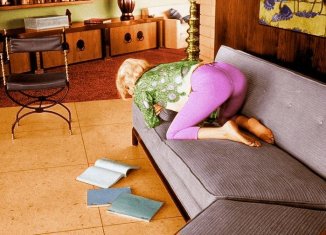
(photos by george barris)
philosophies

motion picture

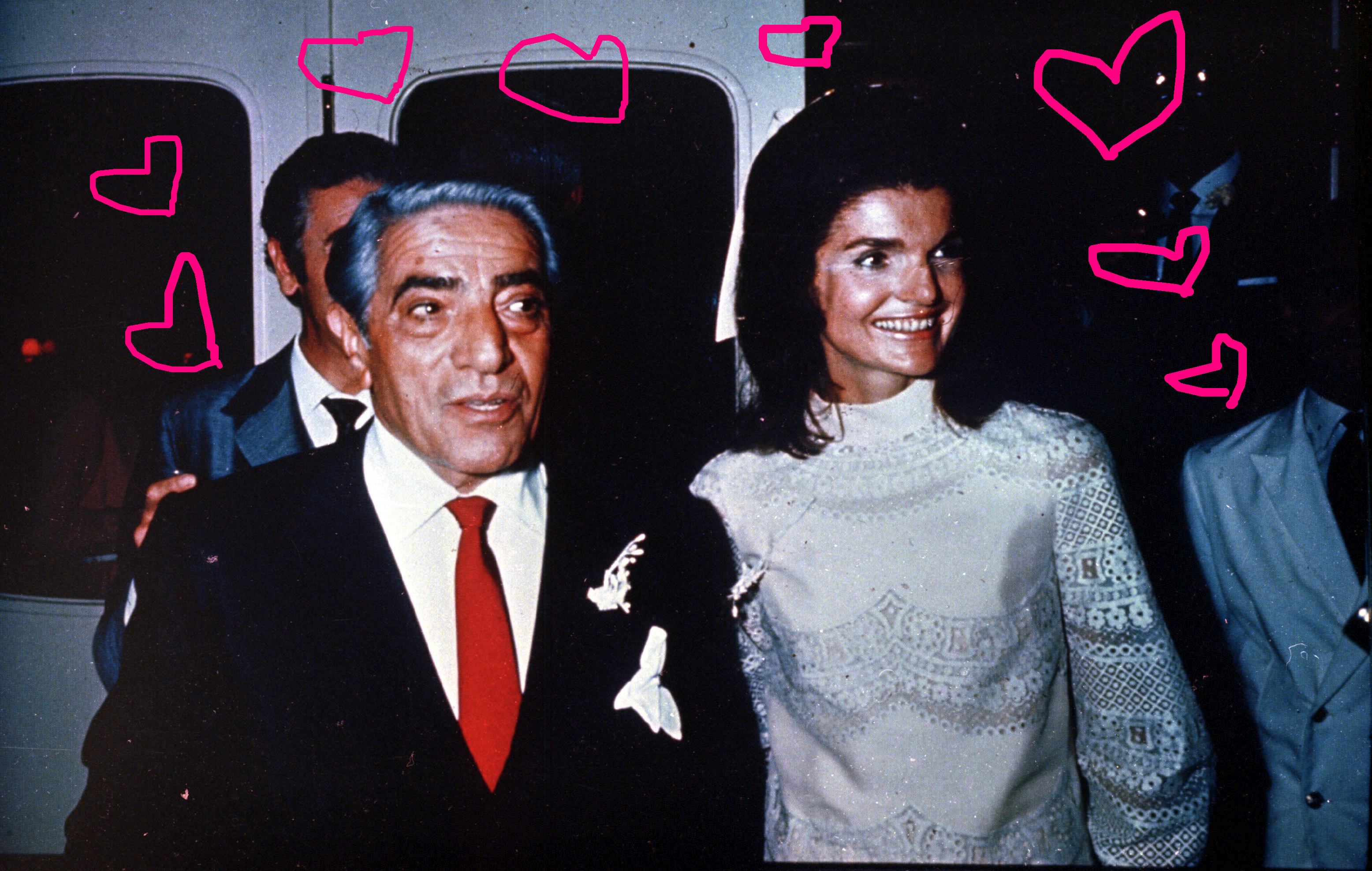
the common thought is this: jackie married onassis for his money.

and that was totally ok. because she was scared after the assassination of robert kennedy and so it’s completely understandable and almost commendable that she would be desperate for the security onassis’s money could provide.

this notion- this idea that she married for money- is preferable to the opposite. it’s easier to swallow. it was totally acceptable if she married for money. it was morally reprehensible if she married for love.

dear world, that makes no sense.

that she would be forgiven her avariciousness but not her poor choice in men.

this bizarre inversion of the moral code perplexes me to no end. it’s massively important and, as is usually the case with massively important things, i don’t know what to do with it.

sometimes the process of writing doesn’t involve actual writing. this is hands down the most frustrating part. because when you’re writing, you’re moving forward. when you’re not writing, it’s hard to view the situation as anything other than, at best, a stand-off and, at worst, a standstill.

jackie and i are in a stand-off. it’s gonna go one of two ways.

the whole morality business is either indicative of the general messedupness of jackie’s relationships or the general messedupness of the world’s relationship with her.

my money’s on the later.


book ’em

(27 april 2011)

i’m sitting in riverside center room 12 listening to this guy wax on about how the male youths of the 60s were pivotally influenced by the depictions of manhood in john wayne’s the sands of iwo jima when i realize that i am maybe writing two books. three if you count that other book that i’ve not really written but about the writing of which i’m writing in that additional book.

so, four.

four books.

i am writing four books.

but what i’m really doing is not writing any of them.

one of the four is done. except that it isn’t because i’m pretty sure now that it may need to become two. if not, it sure as hell needs to become a better one because it’s maybe a half at present. and a crap half at that.

so what we have is this:

jackie: the definitive biography
jackie: the tabloid years
jackie in paris: the biography
jackie in paris: the novel of the failed attempt to write the biography

none of them written. none of them being written.

there’s this phase of writing we don’t talk about much. the phase where you’re writing nothing.

this tends to look like laziness. i would argue it isn’t. but then, maybe i’d think that precisely because it’s the stage i’m in. it’s easier to justify the notion that i’m mentally arranging pieces and plotting course than to admit i’m stewing in a pit of ideas from which i cannot crawl out.

in high school, due to my great fear of tardiness and inability to master a combination lock, i never used my locker but, instead, lugged 30 pounds of textbooks around every day.

that is how writing sometimes feels. all those books and projects and pieces crammed into your skull. you carry them around with you, because it’s a frightening process to get them out and because you do not yet have the key.

carded

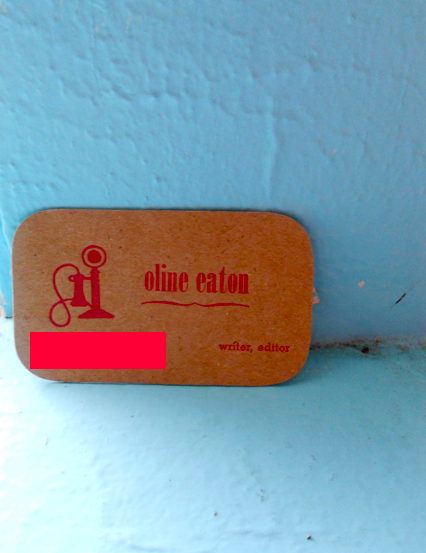
taking a play out of the Lara Ehrlich Playbook of Successfully Gaining Success Now That You’ve Successfully Attained Your Overpriced Liberal Arts Degree, i owned up to the fact that what i want to be is a “writer/editor” and ordered business cards.

they came the other day. pretty! see:

i can only imagine how people must feel upon having published an actual book. all i did was successfully convey my contact information so that is was properly printed on a piece of chipboard and now i want to shower the resulting incandescently beautiful product around the world like confetti.

here’s the thing though. the package came with a handful of leftovers and samples and as incandescently beautiful as my card is, i know that one day- maybe in the long long way far off but one day nonetheless- when money is no longer an option and it isn’t so much a matter of manning up to declare myself a “writer/editor” as ballsing up to embrace hot pink, this card that is merely a sample now will be mine: